
Atlas - Web Trader
Atlas is Midas’ modular web trading platform for advanced investors who need more space, control, and faster access to market data.
It was built for professional traders, desktop-oriented investors, and users who need to follow markets and place orders during the day without relying on mobile.
- Company
- Midas
- Role
- Product Designer
- Timeline
- Apr ‘26 → Jul ‘26
My Role
I led the design of Atlas end to end, turning an early product idea into a working beta in the first 100 days. The launch showed strong user interest, with positive feedback and many new requests shaping the next iterations.
My role was to turn a complex trading vision into a modular, usable, and scalable product experience for different markets and trading behaviors.
Scope
Workflow
We started with user research and competitor analysis to understand the market, user expectations, and where existing tools felt complex.
I established the design system foundations, defined key interface patterns, and worked through the main trading flows in  Figma.
For complex interactions, we recreated the platform structure in a  Claude assisted
  Vercel prototype to test behaviors beyond static screens.
We used  Typeform feedback and
  Fullstory tracking to follow beta usage, understand friction, and prioritize product improvements.
02 / 09
Purpose
Atlas started with a simple signal. Advanced investors were already using desktop, but their workflow was split across tabs, tools, and paid platforms.
They needed more than a bigger trading screen. They needed a workspace where they could read data, follow markets, compare signals, and take action faster.
This shaped Atlas as a modular platform that could support different markets, layouts, and trading needs.
Results from a survey of 423 respondents asking for a desktop trading experience.
Behavior
- 73%
- Use web platforms daily
- 70%
- Use a single screen
- 58%
- Use 2–4 browser tabs
- 35%
- Use desktop at work
Pain points
- 70%
- Expensive data
- 37%
- News & fundamental data
- 37%
- Data lag and freezing
- 30%
- Synchronization issues
What users expected
- 64%
- Advanced technical analysis
- 59%
- Fundamental analysis
- 58%
- Live news and market tracking
- 44%
- Speed and advanced order management
03 / 09
The Challenge
Atlas needed to evolve into a desktop-native trading platform while still working with Midas’ existing product logic and services.
The product had to support dense market data, fast decision-making, multiple trading behaviors, and future markets without losing consistency or becoming difficult to scale.
The challenge was to design a system that felt powerful for advanced users, readable for everyday use, and scalable enough to grow with new asset types.
- Speed
- Fast scanning, fast switching, fast actions.
- Density
- A lot of market data, without losing readability.
- Scale
- A structure that could grow with new markets.
- Continuity
- A desktop native experience connected to Midas’ existing systems.
04 / 09
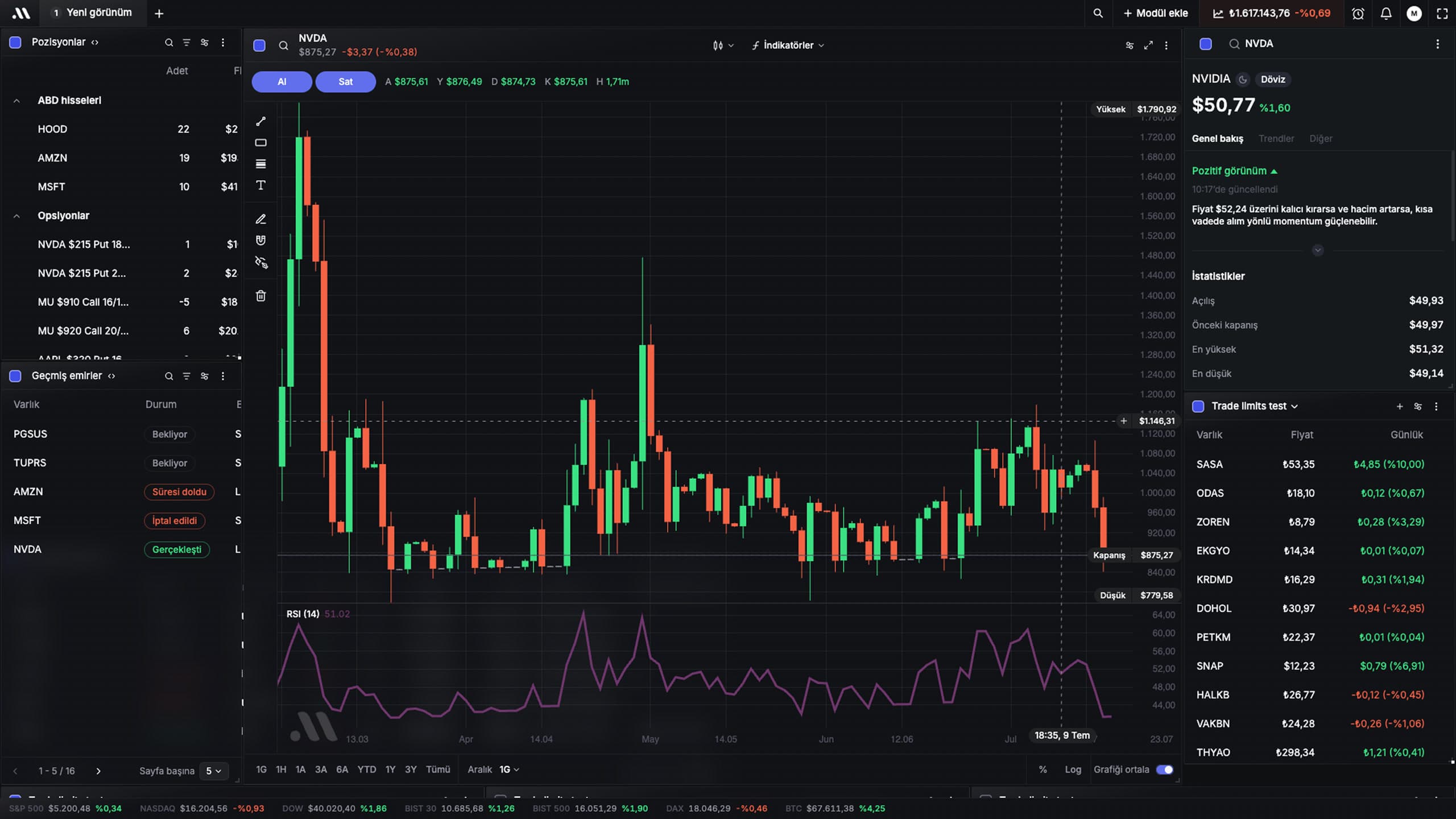
AI Prototyping
Static screens were not enough to explain a product with many modules, states, and interactions.
We cloned a separate repository for AI prototyping, where we used Claude to update, test, and iterate on interactions.
Our workflow started in Figma by defining main scenarios, then evolved through AI-assisted prototyping to refine behaviors and flows, followed by team reviews to evaluate and improve the experience together.
05 / 09
Adding Modules
Users can start with ready-made views or build their own setup from scratch.
Modules like watchlists, charts, positions, order history, depth, and option chains can be added depending on the user’s workflow.
The goal was to make customization powerful, but easy to start.
06 / 09
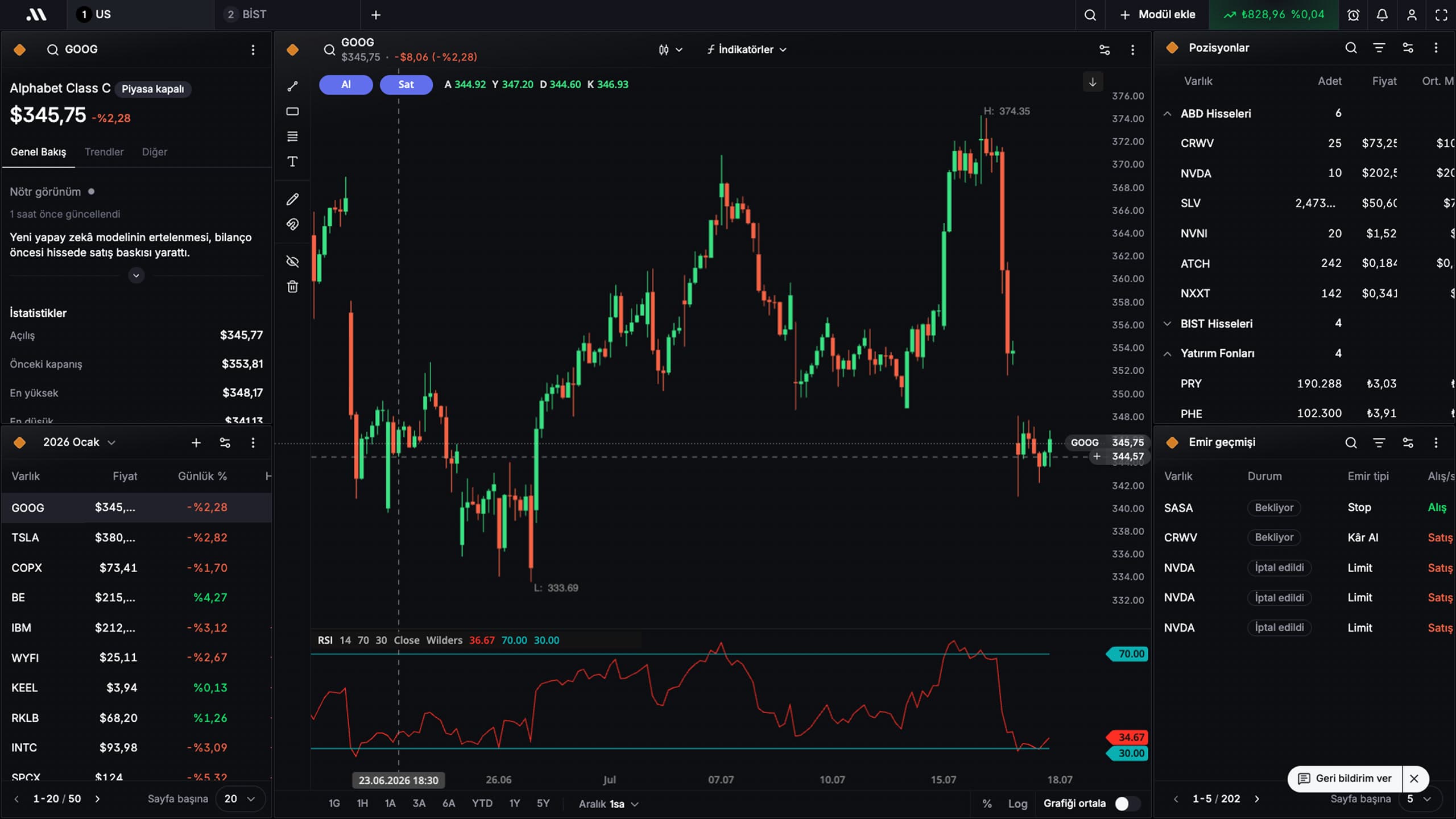
Modular Terminal
Atlas was built as a flexible trading terminal where users can customize the canvas, because different trading styles require different tools, layouts, and levels of information density.
Users can add, arrange, and combine modules based on how they trade. To make this scalable, I adapted the design system into a trading-specific structure that could support dense data, different screen sizes, dark and light modes, and future markets.
The system was built around three product layers:
07 / 09
Linking Modules
Linked modules help users avoid repeating the same action across the workspace.
When modules share the same link color, changing the selected asset in one module updates the related modules with the same context.
This made the workspace feel connected while keeping the layout fully flexible.
08 / 09
Dense Data, Clear Actions
Advanced trading workflows are naturally complex. Users need to follow price movement, compare signals, read market depth, manage positions, and act quickly.
The design challenge was not to reduce the amount of information, but to make it easier to digest and act on.
Atlas needed to support advanced use cases such as option metrics, chart analysis, PnL simulation tools, and faster trading flows for daily traders. Each surface had to keep information readable while bringing actions closer to the moment of decision.
09 / 09
Beta and Outcome
The Atlas beta turned into a real feedback loop with active users.
More than 15,000 users logged in during the beta, and average daily orders increased by 7% in the post-beta window.
We analyzed 2,673 comments. Most feedback was request-driven, with 67% including a suggestion or feature request. We resolved 43% of negative and bug-related feedback during the beta, mostly around chart behavior, indicators, drawing tools, and table interactions.
The next iteration focused on chart improvements, TP/SL order types, the news / KAP module, and new markets.
Top insights
- 15.5K
- Beta users
- 19.1%
- Sessions with orders
- 11.1m
- Average session length
- +7%
- Increase in daily orders among Atlas beta users
- 2.6K
- Feedback and appreciation
- 43%
- Feedback resolved
Feedback to action
- Fixed
- Advanced indicator settings
- Fixed
- Watchlist sorting and drag-and-drop
- Fixed
- Column resizing
- Next
- News flow
- Next
- TP/SL and trailing stop order types
- Next
- Discovery modules
Next project
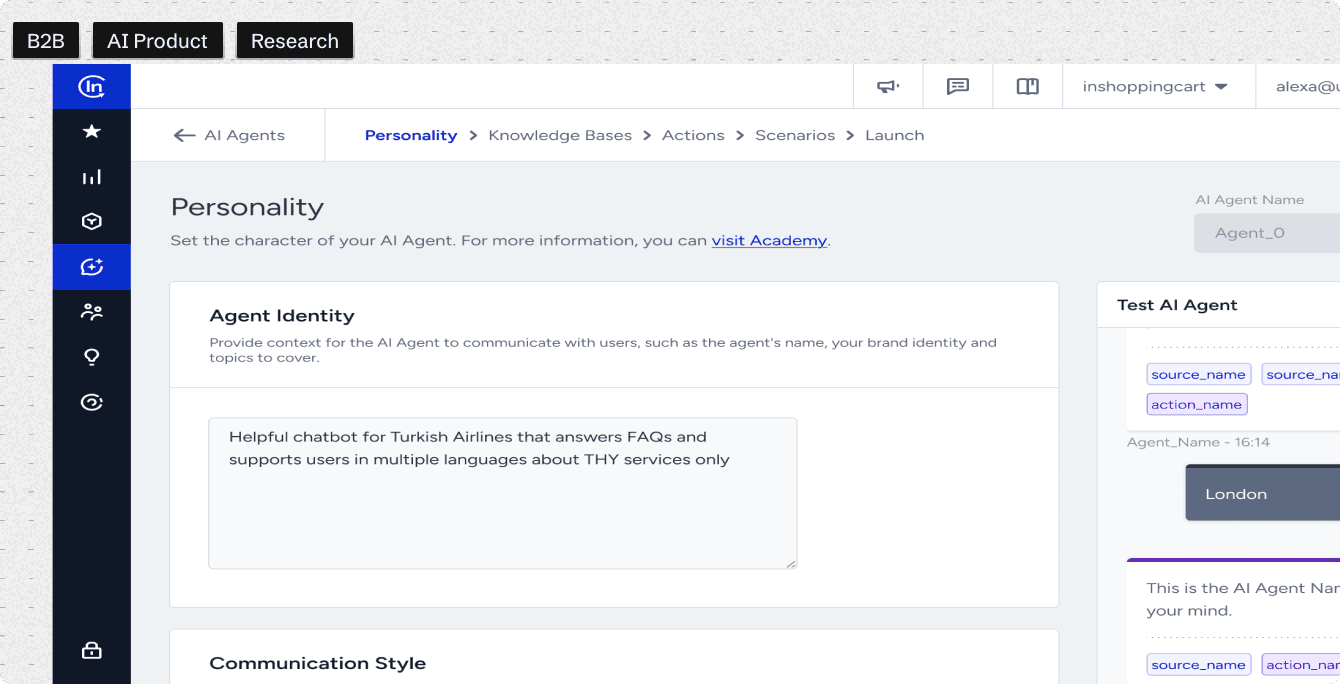
Agent One - AI Customer Service
Designed core workflows for creating, training, testing, and managing AI agents for enterprise support and sales teams.
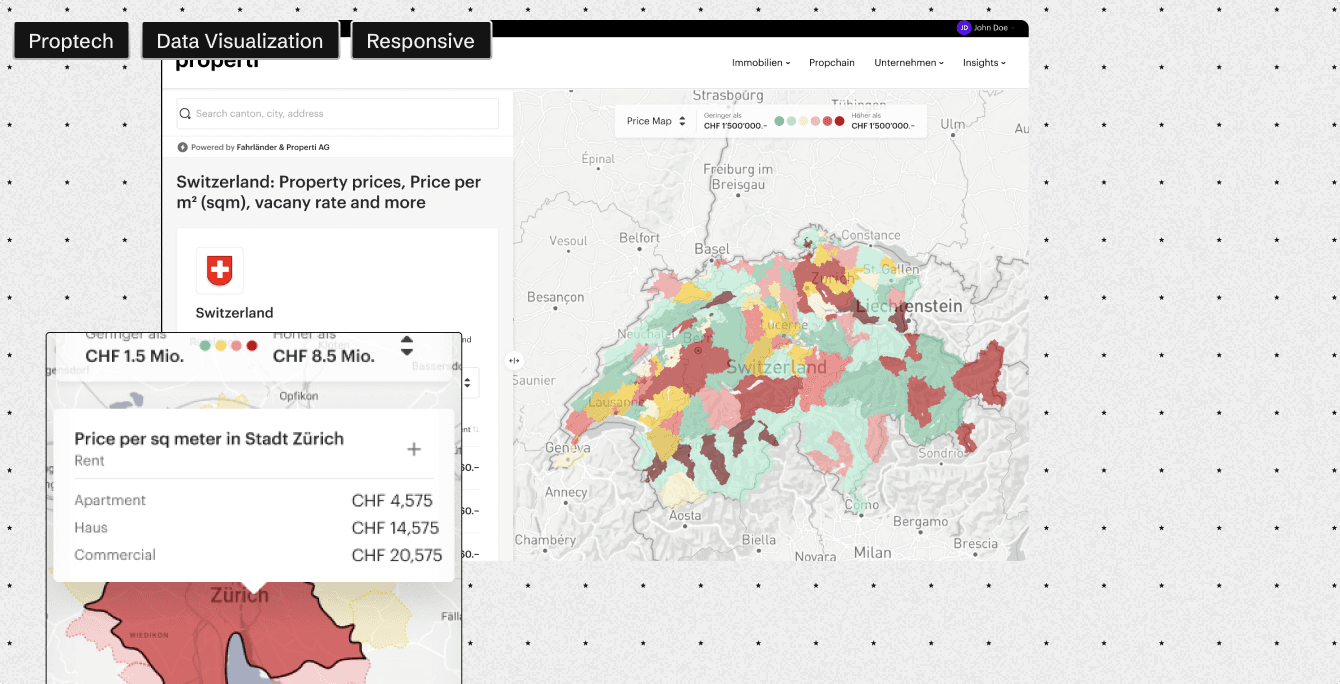
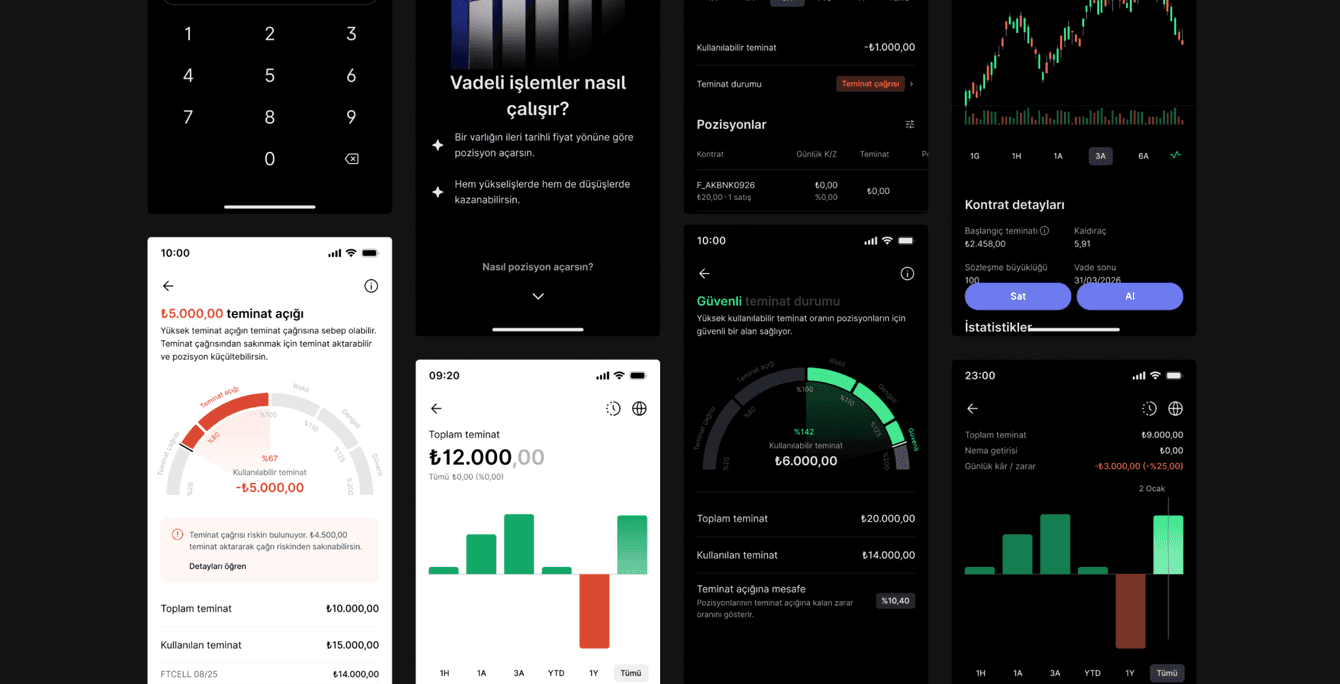
PropIndex - Market Research for Investors
Designed property discovery and market research experiences for professional real estate investors.